
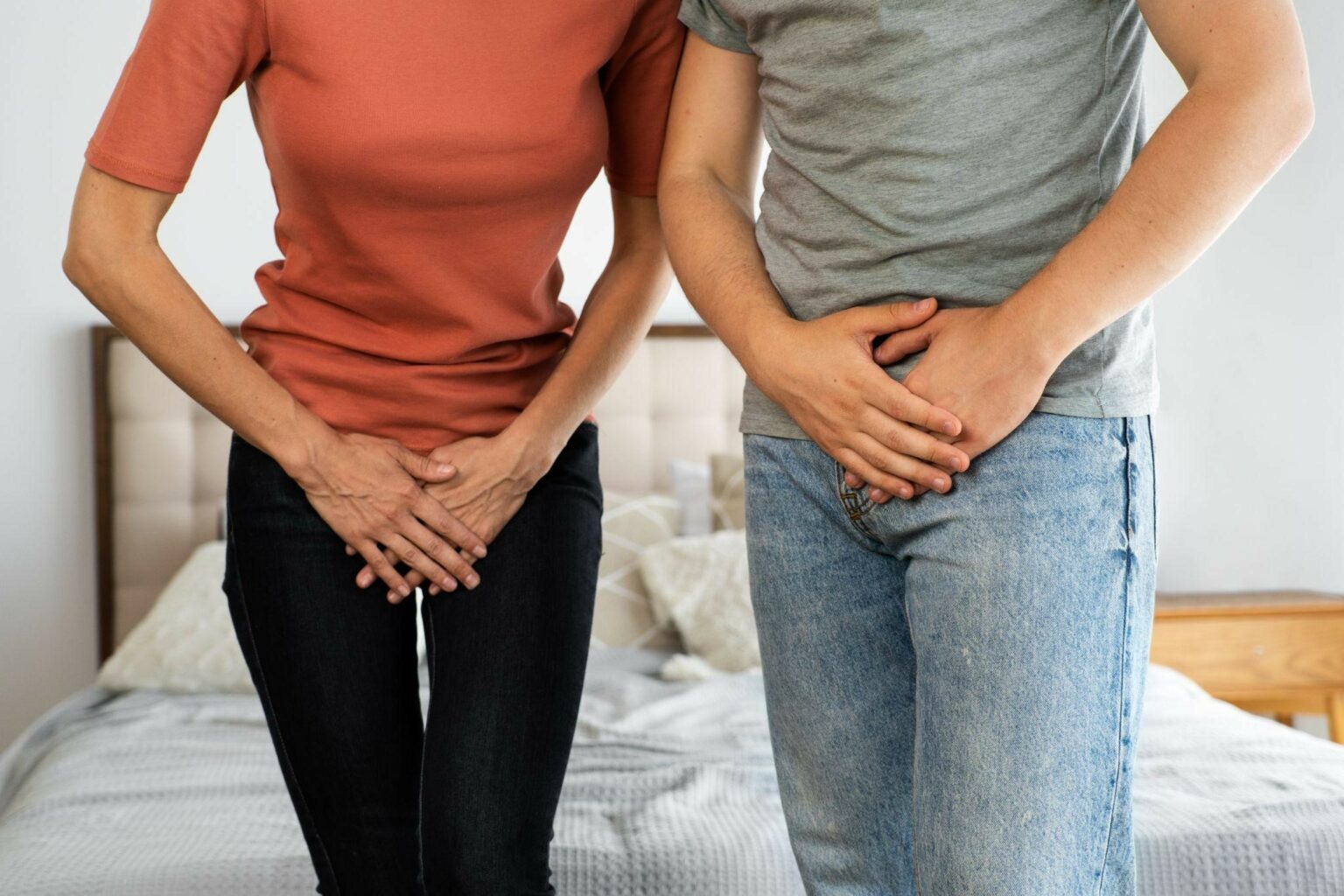
Condylomas (genital warts) are a sexually transmitted infection (STI) known for their tendency to come back after remission. Although they carry no risk of turning into cancer, they can be very bothersome. At Dr. Gianfermi‘s practice in Paris and Levallois-Perret, we offer specialised treatment for external condylomas, in particular with the CO2 laser. We take care to minimise the risk of unsightly scarring while treating this contagious condition effectively.

What is a condyloma?
Condylomas, also known as genital warts, are skin growths caused by certain strains of the human papillomavirus (HPV). They can appear on the genitals, the anus, the perianal area or in the throat.
Condylomas vary in size, shape and colour. They often look like small bumps or flat patches. They usually do not hurt but can sometimes cause itching, bleeding or discomfort.
Condylomas are passed on through sexual contact with an infected person. They can be diagnosed by a clinical examination or specific tests. Depending on how severe and extensive the infection is, treatment may involve topical medication, cryotherapy, surgery or other medical procedures.
I use CO2 laser treatment for external condylomas. This method requires specific expertise and meticulous precision to avoid any risk of unsightly scarring.
How condylomas are transmitted

Condylomas are usually transmitted through sexual contact with a person infected with the human papillomavirus (HPV).
This contact may involve vaginal, anal or oral sex with an infected partner. It is important to know that a person can carry the virus even without any visible symptoms.
They can still pass it on to a sexual partner. Condylomas can also spread through direct skin-to-skin contact with infected areas, even without penetration.
Sharing personal items such as towels or underwear with an infected person may also contribute to transmission. Preventing condyloma infection involves using condoms during sex,
limiting the number of sexual partners, and HPV vaccination, which is available to people of all ages.
Symptoms of condylomas
Condylomas, or genital warts, can cause a range of symptoms that vary from one person to another.
In many cases, they appear as small growths or bumps on the genitals, around the anus or in the perianal area.
These growths may be flat or raised, skin-coloured or brown, and are often grouped in clusters.
Some people infected with the human papillomavirus (HPV) have no visible symptoms for a long time, while others may notice itching, burning, bleeding or pain in the affected area.
Symptoms can vary depending on where the warts are located and on how each person’s body responds to the viral infection.
If you think you may have symptoms of condylomas,
it is essential to see a healthcare professional for an accurate diagnosis and advice on the treatment options available.
Treatment of condylomas
The treatment of condylomas depends on several factors,
including the size, number and location of the warts, as well as the patient’s general health.
Treatment options vary and are discussed between the patient and the doctor.
Here are some of the most commonly used treatment methods:
Topical medication:
Creams or solutions may be prescribed for use at home. They usually contain agents that gradually destroy the genital warts.

Cryotherapy:
This method freezes the genital warts with liquid nitrogen. Freezing destroys the infected cells and the warts gradually disappear.

How cryotherapy works
Surgery:
When warts are large or do not respond to other treatments, surgery may be needed to remove them. This can involve techniques such as electrocautery, surgical excision or laser vaporisation.
Laser treatment:
A laser can be used to destroy genital warts by burning them. This method is often used for stubborn warts or for warts in areas that are hard to reach.
Immunomodulatory therapy:
In some cases, medication that stimulates the immune system may be prescribed to help the body fight the HPV infection and clear the genital warts.
It is important to know that even after genital warts have been treated, the human papillomavirus (HPV) can remain in the body and cause the warts to come back later.
That is why it is essential to follow medical advice and take steps to avoid passing the virus on to others.
Why is the CO2 laser the reference treatment?
The CO2 laser is widely recognised as the reference treatment for condylomas,
especially when they are extensive or have not responded to other therapies. It uses a precise laser beam to vaporise genital warts without damaging the surrounding tissue.
The CO2 laser offers several advantages, including greater precision, high effectiveness and faster recovery than other surgical methods.
It also often brings a significant reduction in symptoms and a visible cosmetic improvement. Patients can usually return to their normal activities shortly after the procedure.
Aftercare measures are usually recommended to support good healing. As the treatment of choice for many cases of condylomas, the CO2 laser is a safe and effective way to remove genital warts and help patients regain their health and confidence.
Precautions before an anti-condyloma laser session
Before undergoing a laser session to treat condylomas, it is essential to take certain precautions to make the treatment as safe and effective as possible.
First of all, you should see a qualified specialist to learn about this sexually transmitted infection (STI):
how it is transmitted, incubation periods, prevention, how contagious it is and its possible link with cancer. The specialist will then assess the condition of your skin and discuss the treatment options with you.
It is also important to tell your doctor about any underlying health problem, any allergy and any medication you take regularly. This may influence the choice of treatment and helps reduce potential risks.
The aim is to give you all the information you need to approach your treatment with confidence.
It is essential to understand that the goal of treatment is to remove the visible lesion, not to eliminate the virus completely. You should also be aware of the risk of recurrence, estimated at around 30%. We share this information so that you can manage your health proactively.
It is also important to know that the choice between the different treatments available for condylomas depends on several factors, including the location of the lesion, the type of lesion and your doctor’s expertise.
Before the laser session, you are usually advised to avoid sun exposure and to stop using any topical product containing irritating ingredients. You should also avoid shaving or waxing the area to be treated for a few days before the session
to prevent further skin irritation. By following these precautions, patients get the most out of their laser treatment while minimising the risk of unwanted side effects.
Treating a condyloma with Dr Gianfermi in Paris and Levallois-Perret: how the session goes
When I treat a condyloma, the session goes as follows:
- For your comfort during treatment, local anaesthesia is given first. The procedure is performed as an in-office (outpatient) procedure, so no hospital stay is needed, which is very convenient for patients.
- The intense light beam of the CO2 laser is absorbed by the tissue and converted into heat, causing controlled vaporisation of the infected tissue. Usually, 1 to 5 laser impacts are applied to each genital wart to limit discomfort during the procedure.
- The precision of the laser beam means only the affected area is targeted, sparing the surrounding tissue. For this technique to be effective and safe, the doctor needs specific expertise to precisely adjust the laser power, the beam diameter and the exposure time according to the depth and extent of the lesions being treated.
I regularly treat external genital warts with the CO2 laser. This experience allows me to adapt the technique to each patient’s specific needs, with the aim of achieving good results and a comfortable recovery.
Recovery after laser treatment of a condyloma
After laser treatment of a condyloma, the treated area may take 3 to 6 weeks to heal, and around 28% of patients may develop a scar.
To support good healing, it is crucial to change the dressing every day until the wound has fully healed.
We will give you all the instructions to follow after your treatment. Do not remove the dressings without your doctor’s prior approval. It is also essential not to scratch the scabs, as this could slow healing and increase the risk of scarring.
CO2 laser treatment of condylomas: what results can you expect?
One of the main advantages of the CO2 laser for external condylomas is that it works immediately. In general, a single CO2 laser session is often enough to remove the skin lesion, although we can schedule a second session together if needed.
The treatment is generally close to 90% effective when the technique is applied correctly, which shows how important it is to choose the right doctor for this type of treatment.
There are currently no specific guidelines on what to do after condyloma treatment. However, because these lesions are often multifocal and the risk of recurrence after treatment is high, it is advisable to set up a follow-up plan adapted to the extent of the initial lesions. The aim is to detect and treat any recurrence early.


