

Introduction
After successful treatment of genital warts, many patients ask: “am I cured for good?” or “can it come back?” The answer is yes — genital warts can come back, for several reasons. Here we explain the difference between persistence and reinfection, how follow-up works, the role of immunity and lifestyle, and when to see a doctor again. The aim: to give you a factual and transparent view of the risk of genital warts recurrence, of genital warts after treatment, of genital wart follow-up and of ways of preventing HPV recurrence.
Persistence vs reinfection: the difference
- Persistence: the HPV virus (or exact genotype) responsible for the warts remains in the body despite treatment, either because the infected cells were not completely destroyed or because the treatment did not reach every microscopic focus.
- Reinfection: this is a new infection, either with the same genotype (rarely) or with another one, often coming from a sexual partner or a later exposure.
Studies show that persistence is more common in certain cases: with HPV-16 infections, in older people, or when the excision margins are not clear. ecancer.org+4BioMed Central+4BioMed Central+4
For example, after a conisation or LEEP, the persistence rate at 6 months can reach ~40%, then gradually falls (≈20-25% at 12 months, ≈10-15% at 18 months) depending on the viral type and age. BioMed Central+2BioMed Central+2
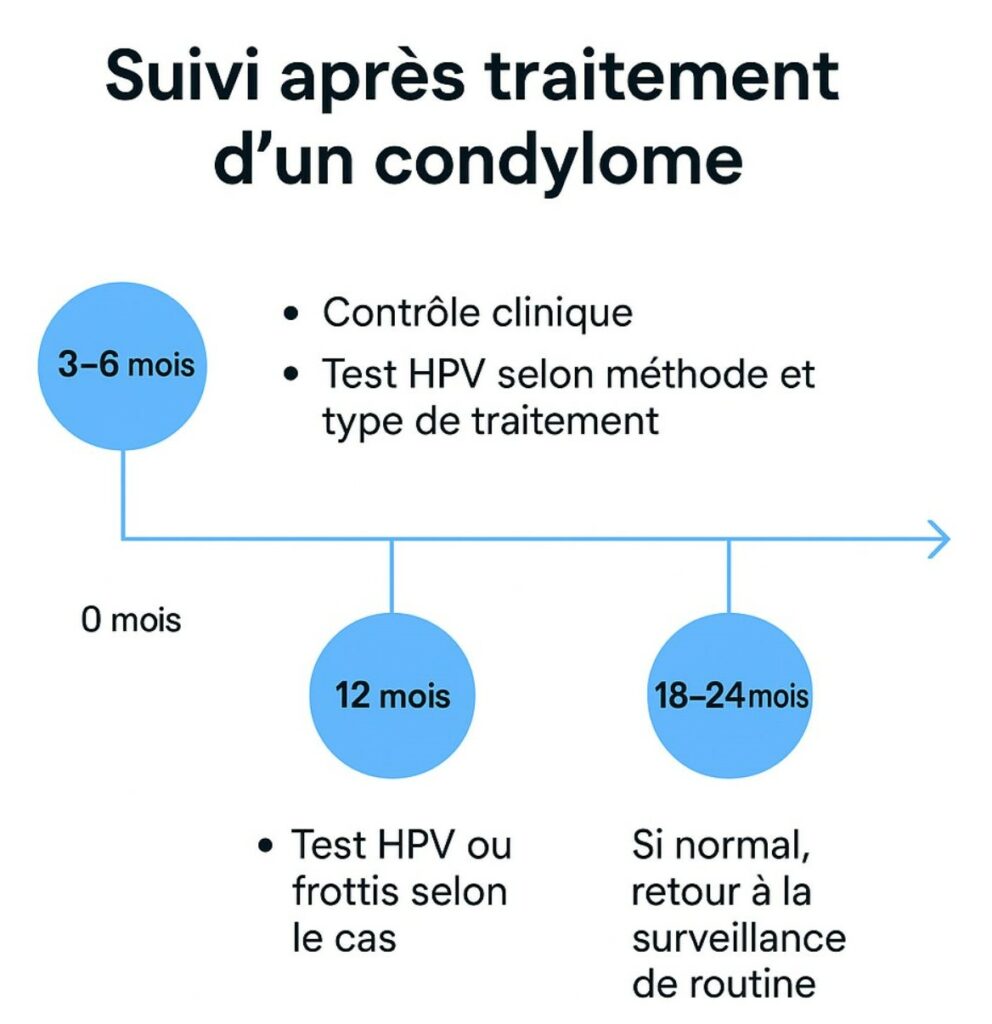
Monitoring window; follow-up schedule
Timing and length of follow-up
Regular follow-up is essential: recurrence or persistence often appears within 6 to 18 months after treatment. BioMed Central+2BioMed Central+2
When | What is checked |
|---|---|
At 3-6 months | clinical check-up; removal of visible lesions; HPV test depending on the method and type of treatment |
Around 12 months | HPV test or smear test as appropriate; check that lesions have regressed |
18-24 months
| if everything is normal, possible return to routine monitoring, depending on guidelines and the HPV type |
Post-treatment follow-up timeline
The role of the immune system; prevention
Factors that encourage or limit recurrence
- HPV type: “high-risk” types, or those harder to clear (e.g. HPV-16), carry a higher risk of persistence. BioMed Central+1
- Age: older people often have a less robust immune response, and therefore slower clearance. BioMed Central
- Viral load, number of types involved: multiple infections and a high viral load can make clearance harder. BioMed Central+1
- General immune status: smoking, stress, nutritional deficiencies and immunosuppressive diseases weaken the body’s defences against the virus.
Lifestyle and behaviour
- Maintain good local hygiene: gentle cleansing, avoid irritation or trauma.
- Avoid smoking and excessive alcohol.
- A balanced diet, enough sleep and stress management to support the immune system.
- Protection during sex: use condoms and limit the number of partners.
- HPV vaccination: even after genital warts, vaccination can help prevent reinfection or infection with other HPV types.
When should you see a doctor again?
- If a new lesion appears (visible wart, persistent itching, bleeding).
- If the HPV test is still positive at 6-12 months, depending on the type and whether it is the same genotype.
- If you notice unusual signs (pain, rapid growth, changes).
- If you have risk factors: age > ~35-40, immunosuppression, high-risk HPV infection.
Conclusion
Yes, genital warts can come back after treatment, either because the virus persists or through reinfection. But it is not inevitable: rigorous follow-up (for at least 12-18 months), appropriate check-ups, a healthy lifestyle and attention to your partners greatly reduce the risk of genital warts recurrence. Every case is different: recommendations are adapted to the HPV type, your health and your age.
Feel free to book an appointment for a personalised assessment if you have concerns, or to set up an appropriate follow-up plan.


