
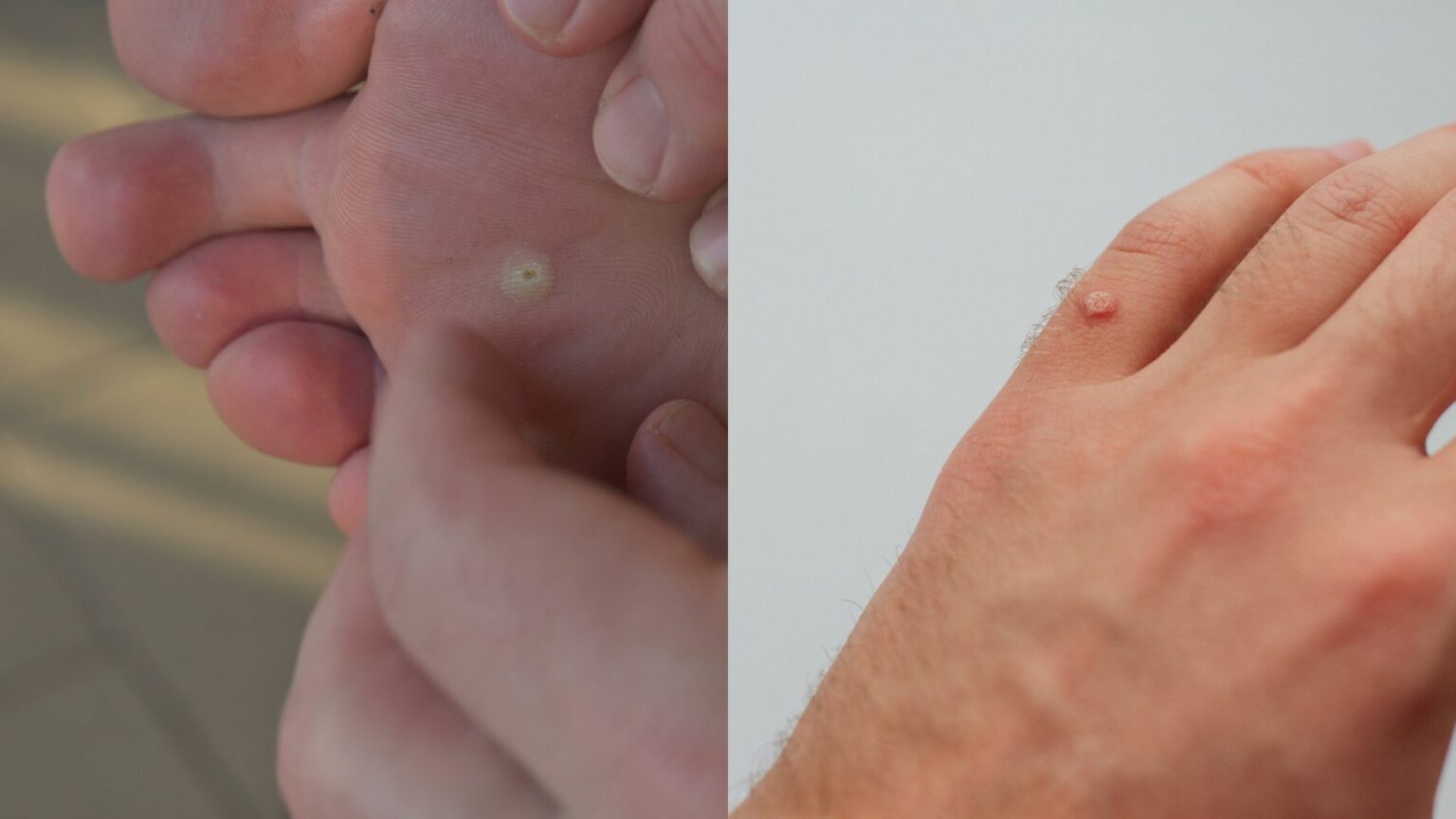
Warts can be bothersome, painful and unsightly skin lesions. They are sometimes difficult to treat, with repeated failure of medical treatments such as cryotherapy, Aldara (imiquimod), etc.
Fortunately, several effective laser-based options are available. Among the most advanced, the CO2 laser and the DEKA VasQ pulsed dye laser stand out for their speed and effectiveness.

Warts: what are they and why treat them?
Warts are benign skin growths caused by the human papillomavirus (HPV). They can appear on different parts of the body, especially the hands, feet and face.
Although they are not dangerous to your health, they can be unsightly and bothersome, painful when walking and socially disabling, which can affect self-esteem.

In some cases, warts disappear on their own, but in others they persist and need more targeted treatment. Today, advanced treatments offer several ways to remove these growths, with safe and lasting results.
What causes warts
Warts are caused by the human papillomavirus (HPV), a group of viruses transmitted through direct contact with an infected person or with contaminated objects.
HPV enters the skin through a damaged area and triggers abnormal growth of skin cells, which leads to the formation of warts. The virus is highly contagious and is easily spread through:
- Direct contact with an infected person: skin-to-skin contact with a wart can transmit the virus, especially if the skin is damaged or irritated.
- Shared objects: using shared personal items such as towels, razors or shoes can also help the virus spread.
- Damp environments: damp places such as swimming pools, changing rooms and public showers are areas where HPV spreads easily.
Some people are more likely to develop warts because of factors such as:
- A weakened immune system: people whose immune system is weakened by illness or treatment are more likely to develop warts.
- Children and teenagers: young people are more prone to catching HPV because of their thinner skin and still-developing immune system.
- Skin injuries: any cut, wound or irritation of the skin makes it easier for the virus to get in and cause infection.
In some cases, HPV can remain “dormant” for some time before warts appear, which makes follow-up and treatment all the more important. Several sessions spaced a few months or even years apart are often needed.
Types of warts
There are several types of warts, each with specific characteristics. Here are the main ones:
- Common warts (Verruca vulgaris): the most frequent type. They usually appear on the hands, fingers or around the nails and have a rough surface and a rounded shape.
- Plantar warts: these form on the soles of the feet and can be very painful because of the pressure applied when walking. They are often thicker and firmer than common warts.
- Flat warts (Verruca plana): this type is smaller and smoother, with an almost flat surface. They usually appear on the face, arms or legs and are often multiple.
- Filiform warts: these warts have an elongated shape and can appear on the face, around the mouth or the eyes. They are often thinner and more raised than other types.
- Genital warts (condylomas): these appear in the genital area and are caused by certain types of HPV. They require specific treatment because of their sensitive location.

Each type of wart may need a different treatment depending on its size, location and impact on the patient’s well-being. For effective and safe treatment, it is essential to see a specialist who can choose the most appropriate method.
Why treat them?
Although warts are generally benign and sometimes disappear on their own, they can cause a number of problems.
Cosmetically, warts can affect the appearance of the skin, leading to discomfort or lower self-esteem, especially when they are on visible areas such as the face or hands.
Some warts, particularly plantar warts, can also be painful and make walking difficult. If left untreated, they can spread to other areas of the body or to other people.
In addition, some types of genital warts may be linked to a higher risk of other sexually transmitted infections.
This is why it is recommended to see a specialist to assess and treat warts, especially if they become persistent or painful and medical treatments have not worked.
With modern solutions such as the CO2 laser and the DEKA VasQ pulsed dye laser, it is now possible to get rid of them quickly and effectively, without visible scarring. With the CO2 laser, however, healing may take a few days.
The CO2 (carbon dioxide) laser: an effective, proven treatment
The CO2 laser is one of the most widely used techniques for treating warts. This type of laser emits a concentrated beam of light that vaporises the wart while preserving the surrounding skin. It removes warts quickly while stimulating skin regeneration.

Benefits of the latest-generation DEKA Duoglide CO2 laser
- Immediate effectiveness: the CO2 laser treats warts effectively, even the most stubborn ones.
- Quick recovery: healing is usually quick, with a minimal risk of scarring.
- Precision: this method specifically targets the affected tissue while sparing the surrounding skin.
However, although the CO2 laser is very effective, it requires local anaesthesia and a healing time of a few days to a few weeks.
On the face and intimate areas, a darker or lighter (hyper- or hypopigmented) mark may remain after treatment. This is where another, more innovative type of laser comes in: the DEKA VasQ pulsed dye laser.
The DEKA VasQ pulsed dye laser: a new approach to wart treatment
The pulsed dye laser is an innovative treatment that offers many advantages over traditional lasers. Less common than the CO2 laser, the DEKA VasQ is a highly specific tool that treats warts in a particularly gentle and effective way.
How does the DEKA VasQ pulsed dye laser work?
The principle of the pulsed dye laser is simple. It targets the wart’s blood microcirculation, “cuts it off” and starves the wart without damaging the surrounding skin.
Unlike the CO2 laser, this treatment does not leave visible scars and allows much faster healing. Thanks to the way it works, the DEKA VasQ is a very good alternative for patients looking for a treatment with minimal discomfort and no scarring.

Benefits of the DEKA VasQ for wart treatment
- No lengthy healing: unlike other lasers, DEKA VasQ treatment does not leave visible scars, a major advantage for patients concerned about appearance.
- Less pain: patients tolerate this treatment much better because it is non-invasive and causes only minimal discomfort.
- Targeted effectiveness: the DEKA VasQ is particularly effective at removing warts while preserving the integrity of the surrounding skin.
How wart treatment works at Dr Massimo Gianfermi’s practice in Paris and Levallois-Perret
Wart treatment at Dr Massimo Gianfermi’s practice in Paris and Levallois-Perret takes place in a modern, safe setting, where each step is designed for your comfort and for the success of the treatment.
Dr Gianfermi and his team support you throughout the process, giving you clear information and personalised follow-up at every stage.
1. Initial consultation: personalised assessment
Everything starts with an initial consultation during which Dr Gianfermi assesses the nature of your warts. This step is essential to determine the treatment method most suited to your needs.
He will take the time to confirm the diagnosis, assess the extent of the warts, examine their location and size, and discuss the available options.
During this consultation, Dr Gianfermi will explain the benefits and specific features of CO2 laser or DEKA VasQ pulsed dye laser treatment.
He will also answer all your questions about the procedure, the recovery, the number of sessions, the possible risks and the expected results.
2. Treatment planning
Once the treatment method has been chosen, Dr Gianfermi schedules your session according to the complexity of the wart to be treated. He makes sure the treatment fits your constraints, with a quick procedure and the lowest possible risk.
3. Preparing for the session
Before the treatment, Dr Gianfermi and his team carefully prepare the area to be treated. For greater comfort, local anaesthesia is sometimes used, depending on the location and size of the wart, so that the procedure is as comfortable as possible. The skin is disinfected.
4. Laser treatment
Dr Gianfermi then performs the laser treatment, precisely targeting the wart with the DEKA Duoglide CO2 laser or the DEKA VasQ pulsed dye laser, depending on the case.
- CO2 laser: the laser beam removes the wart by vaporising the infected tissue in a targeted way.
- DEKA VasQ pulsed dye laser: this laser cuts off the wart’s microcirculation, starving it without creating visible scars.
The procedure is quick, usually lasting from a few minutes to half an hour depending on the size and complexity of the wart.
5. Follow-up and recovery
Once the treatment is over, you can return to your daily activities straight away. For plantar warts and warts on the hands, however, it is recommended to avoid sport until the skin has fully healed.
You will be given specific recommendations to support recovery and avoid any irritation.
Dr Gianfermi will advise you on aftercare, in particular moisturising the skin and protecting it from the sun. Slight redness or temporary swelling is normal and usually disappears within a few days.
Healing sometimes takes longer depending on the size and thickness of the original lesion. Dressings are sometimes needed for a few days.
6. Follow-up consultation
After a few weeks, a follow-up consultation will be scheduled, or you may be asked to send photographs, so that the results of the treatment can be assessed.
Dr Gianfermi will check that the wart has been completely removed and, if necessary, will make adjustments to achieve the most satisfactory result possible.
Throughout your care, Dr Gianfermi and his team remain available to answer any questions.
Why choose Dr Massimo Gianfermi for your wart treatment?
Dr Massimo Gianfermi is an experienced specialist in cosmetic and reconstructive surgery. With in-depth training and experience in using the latest technologies, such as the CO2 laser and the DEKA VasQ, he is well qualified to offer his patients personalised, high-quality care.
Dr Gianfermi makes a point of taking each patient’s individual needs into account, in order to offer treatments that combine safety, comfort and satisfactory results. His patient-centred approach ensures that every treatment is carried out in optimal conditions.
Conclusion: precise, effective treatment to remove your warts
If you suffer from warts and want an effective, quick treatment without scarring, the DEKA VasQ pulsed dye laser may be the right solution. If your wart is deep and keeps coming back, the CO2 laser will be preferred. With Dr Massimo Gianfermi’s expertise, you receive personalised, high-quality care designed to meet your cosmetic and functional expectations.
Run out of options for treating your warts? Book an appointment at our practice for laser treatment. Call now for a personalised consultation with Dr Massimo Gianfermi.


