

Condylomas are benign skin lesions caused by the human papillomavirus (HPV). These genital warts affect many people and are often a source of worry. Understanding what they are, how they are transmitted and how they show up makes it easier to deal with them and to make the right decisions for your health.
Definition: condylomas and HPV
A condyloma is a skin growth caused by infection with certain types of human papillomavirus (HPV). These lesions mainly appear on the genitals and around the anus. They look like small skin-coloured or pinkish warts, sometimes darker.
There are more than 100 different types of HPV, about 40 of which can infect the genital area. Condylomas are mainly caused by HPV types 6 and 11, which are classed as low-risk (low oncogenic potential) viruses. These types are different from the high-risk HPV types (16, 18, 31, 33) associated with cervical cancer.
HPV infection is extremely common. Around 80% of sexually active people catch at least one type of HPV during their lifetime. In most cases, the immune system clears the virus on its own within 1 to 2 years, without any visible lesions.
Condylomas are the most common viral sexually transmitted infection in young adults. Their prevalence is estimated at 1 to 2% of the general population, with a peak incidence between the ages of 20 and 30.
Transmission: skin-to-mucosa contact
Condylomas are mainly transmitted through direct skin-to-skin contact during sex. Unlike some other infections, penetration is not necessary: simple contact between genital areas is enough to pass on the virus.
Routes of infection include vaginal, anal and oral sex, as well as intimate contact without penetration. The virus can also be transmitted via contaminated objects, although this route remains exceptional.
The contagious period varies. A person can transmit the virus even when there are no visible lesions, because HPV can persist in skin cells that look healthy. This asymptomatic transmission explains why it is often difficult to identify the source of infection.
It is important to note that condoms, although essential for prevention, do not fully protect against condylomas. The virus can infect areas the condom does not cover, such as the base of the penis, the scrotum or the vulvar lips.
Risk factors for infection
Several factors increase the likelihood of developing condylomas. The main risk factor remains having multiple sexual partners and starting sexual activity at an early age.
Immunosuppression, whether caused by illness, treatment or stress, encourages condylomas to appear and persist. People with diabetes, transplant recipients and people living with HIV are at higher risk.
In women, pregnancy is a period of particular vulnerability. Hormonal and immune changes can reactivate a latent infection or make existing condylomas grow.
Smoking weakens local immune defences and increases the risk of persistent infection. Age also plays a role: young adults are more likely to develop condylomas, while natural immunity tends to improve with age.
Anatomical areas and symptoms
In men, condylomas mainly develop on the glans, the foreskin, the shaft of the penis and the scrotum. The perianal area can also be affected, particularly after anal sex. More rarely, lesions can appear in the urethra or the mouth.
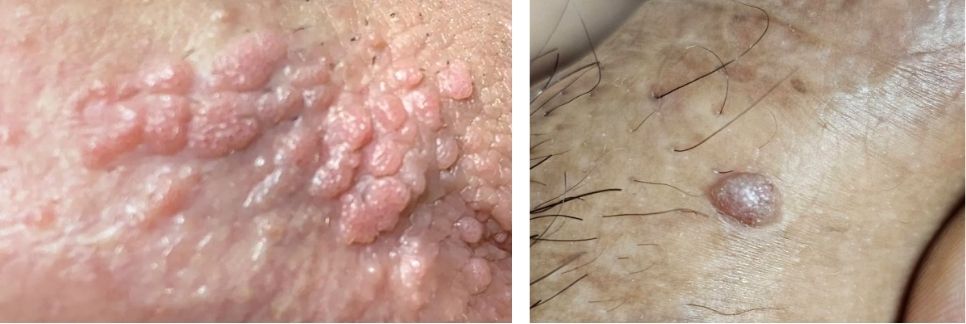
In women, the most frequently affected areas are the vulva (labia majora and labia minora), the vaginal opening, the perineum and the perianal area. The cervix and the vagina can also have condylomas, which are usually detected during gynaecological examinations.
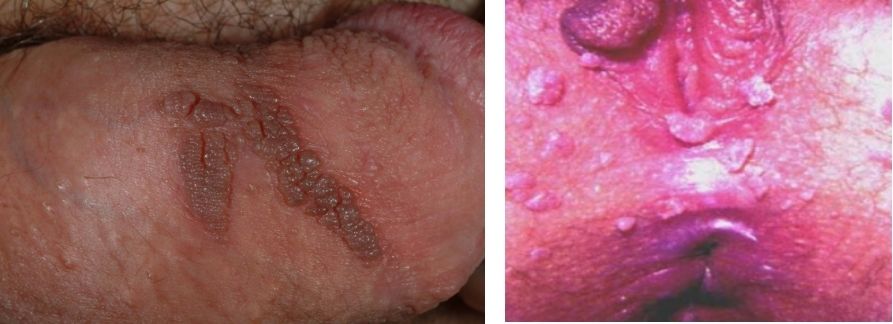
Condylomas take several forms. Acuminate condylomas look like small cauliflowers or cockscombs, with an irregular surface. Flat condylomas are more discreet, forming small, slightly raised patches. Papular condylomas look like small, firm, rounded bumps.
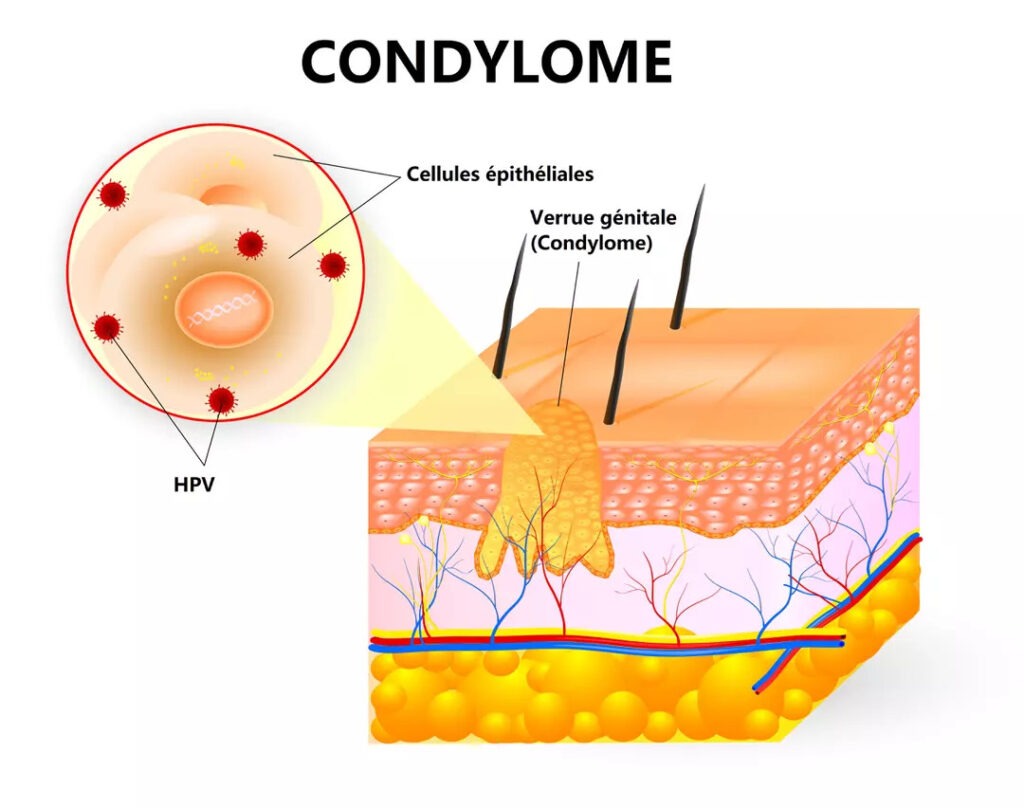
Most of the time, condylomas cause no symptoms and do not hurt. They can occasionally cause mild itching, local discomfort or slight bleeding when rubbed. The psychological impact can be significant because of how they look and concerns about passing them on.
When to see a doctor and which tests?
You should see a doctor as soon as new lesions appear in the genital or anal area. Seek advice promptly, even if you are unsure, because early diagnosis makes treatment easier.
A GP, gynaecologist, urologist or dermatologist can make the diagnosis. Clinical examination is usually enough to identify typical condylomas. The doctor may use an acetic acid test, which turns HPV lesions white and reveals flat condylomas that are hard to see.
Dermoscopy allows a closer look at the structure of the lesions. A biopsy is only needed if the diagnosis is uncertain or if the lesions do not respond to treatment.
In women, a cervical smear is recommended to screen for any abnormalities of the cervix. Testing for other sexually transmitted infections may also be offered.
It is advisable for your partner or partners to see a doctor too, even if they have no visible symptoms. This makes it possible to detect asymptomatic condylomas and reduce the risk of reinfection.
Diagnosing condylomas requires an individual approach. Every situation is unique and deserves a personalised medical assessment to decide on the most appropriate course of action.
The information presented here does not replace a medical consultation. Every situation requires an individual assessment by a qualified healthcare professional.


