Important: the FotoFinder is located at 54 Bd des Batignolles, 75017 Paris. FotoFinder appointments must be booked on Doctolib under the FotoFinder section only, not under “mole”. Thank you.
Skin cancer
Dr Massimo Gianfermi and his team offer their expertise and technical skill in dermatologic surgery for optimal care
1. Introduction to skin cancer
Skin cancers are common malignant tumours affecting a growing number of people every year.
They mainly fall into three types:
basal cell carcinoma (BCC), squamous cell carcinoma and melanoma.
We will not cover tumours that do not directly involve the skin, nor rarer tumours or those of intermediate malignancy.
In this article, we take a detailed look at these cancers, their causes, symptoms, treatment and prevention.

2. Basal cell and squamous cell carcinomas
2.1 Basal cell carcinoma (BCC)
2.1.1 Symptoms of BCC
- A sore that does not heal
- A pearly growth that does not hurt
- Small blood vessels around the edge (telangiectasia)
- Bleeding or crusting
2.2 Squamous cell carcinoma (SCC)
2.2.1 Symptoms of SCC
- A skin lesion that keeps changing
- A firm red nodule
- A painful ulcer that bleeds
3. Melanoma
3.1 Symptoms of melanoma
- A mole that changes in appearance
- An asymmetrical skin lesion
- A lesion with uneven colour or irregular borders
4. Causes of skin cancer
- Sun exposure
- Family history
- Fair skin and red hair
- Pre-existing skin lesions
5. Diagnosing skin cancer
6. Treating skin cancer
6.1 Surgery
- The standard treatment for skin cancer is surgery, which involves removing the tumour and, in some cases, the surrounding lymph nodes. The excision margin depends on the type and size of the tumour.
6.2 Radiotherapy
- Radiotherapy may be used in addition to surgery, particularly when the tumour is difficult to operate on, or if it recurs.
6.3 Chemotherapy
- Chemotherapy is generally reserved for metastatic or locally advanced skin cancers. The drugs used vary according to the type of cancer.
6.4 Immunotherapy
- Immunotherapy is a promising approach for treating advanced or metastatic melanoma. It stimulates the immune system to fight the cancer.
6.5 Targeted therapies
- Targeted therapies act on specific genetic mutations in cancer cells. They are particularly useful in treating melanomas that carry certain mutations.


Request an appointment
Submit your appointment request and one of our patient care coordinators will contact you shortly.

7. Preventing skin cancer
- Sun protection (sunscreen, protective clothing, hat)
- Limiting exposure to the sun
- Skin self-examination
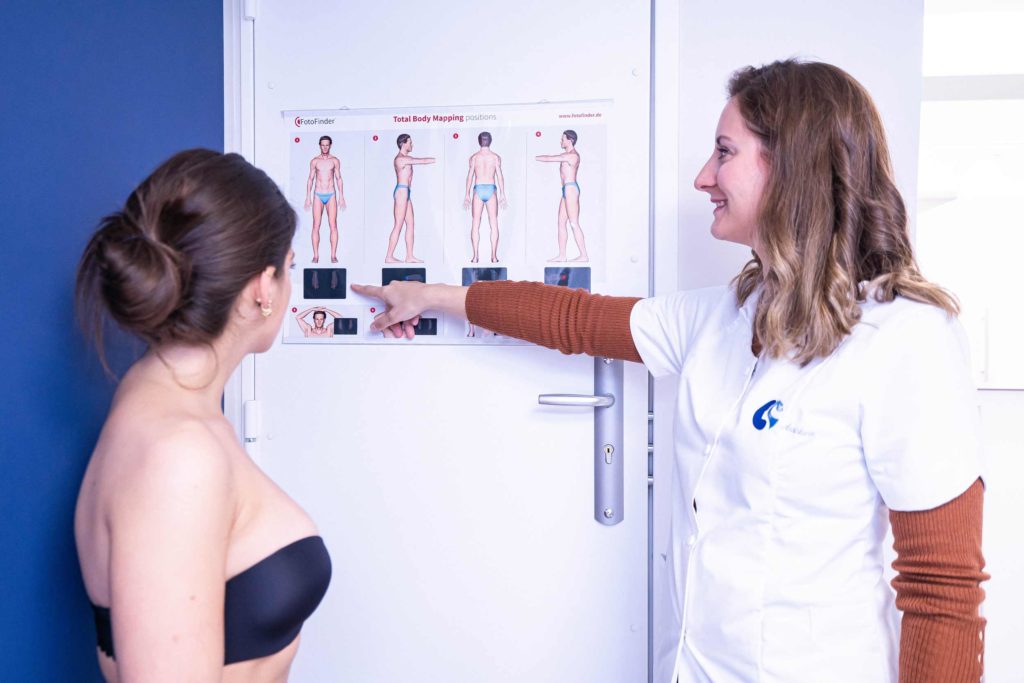
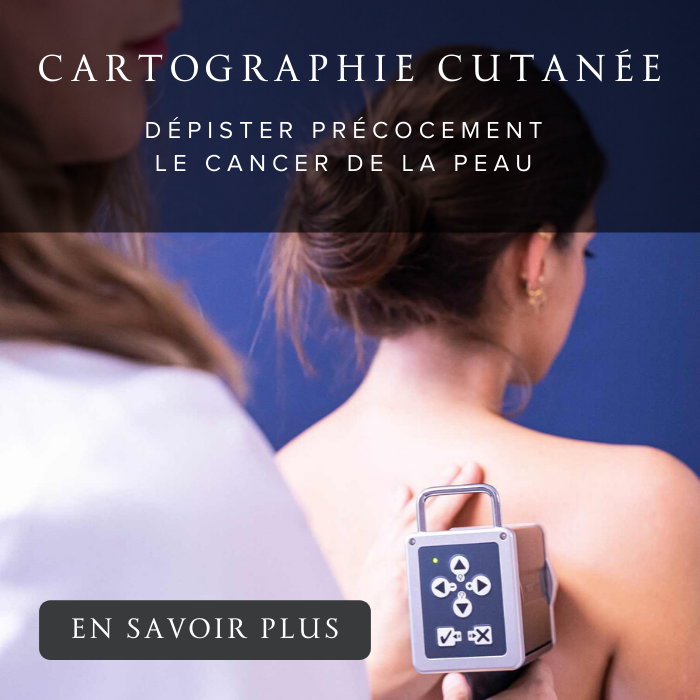
- Using dedicated technology to monitor moles: FotoFinder
- Regular visits to a dermatologist
8. Conclusion

About
Get yourself checked
Early detection of skin cancer offers a better chance of cure and survival, particularly for cutaneous melanoma.
In France, a national skin cancer screening day is held every year in May by the French national union of dermatologists-venereologists (SNDV). A free, anonymous examination is offered by dermatologists throughout France.
Skin cancer is detected early either during a medical examination or after patients notice a potentially suspicious lesion: a sore that does not heal, a spot or scab that persists or changes, an atypical brown patch, or a mole that looks different.
On average, 100,000 skin cancers are diagnosed every year in France.