

You have noticed a small, unusual growth on your vulva, or your gynecologist mentioned the word “condyloma” after a Pap smear. The news can be unsettling. Yet genital warts in women are an extremely common infection: Santé Publique France estimates that around 80% of sexually active women will come into contact with HPV during their lifetime. Fortunately, current treatments — including CO2 laser — give very good results when treatment starts early.
This article is written specifically for women: whether you suspect a condyloma, have just been diagnosed, or want to understand the particular issues HPV raises for women (cervix, pregnancy, fertility), you will find practical answers here. For an overview of the topic beyond the female perspective, please see the complete guide to genital warts.
How to recognize genital warts in women
What the lesions look like
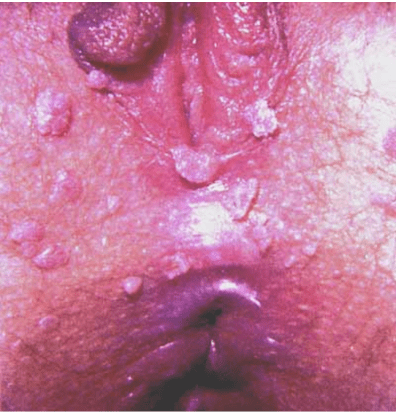
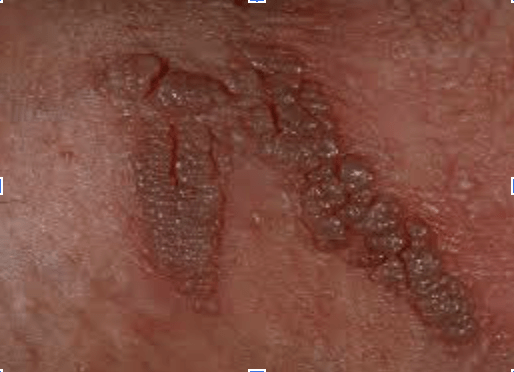
The most common form in women is condyloma acuminatum: small, fleshy growths, pink or greyish, with an irregular surface, sometimes clustered together (the classic “cauliflower” appearance). Their size ranges from a few millimeters to several centimeters when they proliferate.
There are also flat condylomas, which are much more discreet and sometimes invisible to the naked eye. These are often discovered by chance during a routine gynecological examination, or revealed by an abnormal cervical smear. For a detailed visual description, the article what does a genital wart look like helps identify the different forms.
Associated sensations
Many of the patients I see in consultation describe the same symptoms:
- Mild to moderate itching in the vulvar area
- A burning sensation, especially after intercourse or washing
- Bleeding after contact (intercourse, wiping)
- A feeling of discomfort or a “bump” when touched
- Irritation when wearing tight underwear
Worth knowing: many women infected with HPV feel absolutely nothing. The discovery is then incidental, either during an examination or pointed out by a partner.
How long after infection do they appear?
The average incubation period is 2 to 8 months after contact, but late onset after more than a year has been documented. In practice, this means it is often impossible to identify with certainty which partner transmitted the infection. This avoids a great deal of unnecessary blame within couples — a point I often raise in consultation.
At-risk areas in women
Vulva, vagina, cervix: the three key areas
In women, genital warts can affect several areas, some more accessible to self-examination than others:
- Vulvar warts: labia majora, labia minora, clitoral hood, posterior fourchette. The most visible form and therefore the one most often self-detected.
- Vaginal warts: inner vaginal walls. Invisible without a speculum, sometimes responsible for discharge or contact bleeding.
- Cervical warts: surface of the cervix, squamocolumnar junction. Detected with a speculum or on a smear. A location that requires particularly close monitoring.
- Perianal and anal warts: anal margin and anal canal, areas frequently affected after anal intercourse or by contiguous spread.
- Urethral meatus: the opening of the urethra, rarer but possible.
Why the cervix is monitored closely
The cervix deserves particular attention. Certain HPV strains (notably HPV-16 and HPV-18) are associated with an increased risk of cervical dysplasia and, eventually, cervical cancer. This is why the cervical smear remains the key screening test for women. INCa (the French National Cancer Institute) points out that cervical cancer still accounts for around 3,000 new cases a year in France, with 1,100 deaths, mainly due to late screening.
The good news: the strains that cause external genital warts (HPV-6, HPV-11) carry a low oncological risk. Having vulvar warts therefore does not necessarily mean having an at-risk lesion on the cervix. But co-infection is possible, hence the importance of systematic gynecological screening.
Diagnosing genital warts in women
Full gynecological examination
Diagnosing genital warts in women always starts with a careful clinical examination. In consultation, I proceed in several steps:
- External inspection (vulva, perineum, anal margin) in natural light, then with a lamp
- Speculum examination to visualize the vaginal walls and the cervix
- Possible application of 5% acetic acid: HPV-positive areas turn white, revealing flat warts invisible to the naked eye
- Vaginal examination to assess the consistency of the lesions
The examination only takes a few minutes but allows a diagnosis in most cases and, above all, precise mapping of the affected areas before a treatment is proposed.
Cervical smear and HPV screening
If you have not had a recent smear, I always prescribe one. The smear (or the HPV test, now preferred after age 30) detects HPV-related cell abnormalities. The French National Authority for Health (HAS) recommends screening every 3 years between ages 25 and 30, then every 5 years between ages 30 and 65. Annual follow-up may be recommended if you have a history of genital warts.
Colposcopy if in doubt
If the smear comes back abnormal or the examination reveals a suspicious lesion on the cervix, a colposcopy may be indicated. This examination uses a special microscope to look at the cervix under high magnification and allows targeted biopsies if necessary. For a consultation for genital warts at Dr Gianfermi’s practice, these additional tests are arranged in partnership with referring gynecologists when needed.
Genital wart treatments suited to women
The choice of treatment depends on the location, the number of lesions and your personal situation (pregnancy, plans for pregnancy, medical history). To compare the effectiveness of the different treatments and their recurrence rates, the dedicated article goes into detail. Here are the options specifically suited to women.
Topical treatments: imiquimod and podophyllotoxin
These creams are applied at home, on prescription:
- Imiquimod 5% (Aldara®): an immunomodulating cream, applied 3 times a week for a course of 8 to 16 weeks. 50–70% effective on a small number of external lesions.
- Podophyllotoxin (Condyline®, Wartec®): a direct caustic effect, short courses of a few days, to be repeated. 40–60% effective.
Limitations: these treatments can only be used on external areas (vulva, perineum). They are contraindicated during pregnancy. They do not treat warts in the vagina or on the cervix, which require in-office treatment.
Cryotherapy with liquid nitrogen
A good option for limited vulvar warts. Liquid nitrogen is applied directly to the lesion. Several sessions 1 to 3 weeks apart. Compatible with pregnancy. Drawback: it can be painful and leave areas of depigmentation.
CO2 laser: the preferred technique for complex areas
CO2 laser for genital warts is my reference tool for situations beyond what topical treatments can achieve:
- Multiple or extensive vulvar warts
- Vaginal warts (an area topical treatments cannot reach)
- Perianal and anal warts
- Recurrences after other treatments have failed
- Warts during pregnancy (assessed case by case)
The laser vaporizes the lesion layer by layer, with millimeter precision that preserves the surrounding healthy tissue. The procedure is carried out under local anesthesia for limited areas, or under general anesthesia in an operating room for extensive lesions or difficult areas. For the technical detail of laser treatment of genital warts in Paris, the dedicated article covers the full procedure.
Benefits I observe in practice in my patients:
- A cosmetic result often superior to other techniques (little or no visible scarring)
- Immediate hemostasis (little bleeding)
- Healing in 7 to 14 days depending on the extent
- Multiple lesions can be treated in a single session
Special case: genital warts during pregnancy
Pregnancy complicates treatment for two reasons. First, hormonal changes and relative immunosuppression encourage warts to proliferate during the 9 months. Second, most topical treatments (imiquimod, podophyllotoxin) are contraindicated.
The safe options are cryotherapy or CO2 laser, usually carried out in the second trimester. The aim is to reduce the viral load at the time of delivery, to lower the (rare but real) risk of transmission to the newborn. Coordination with your obstetrician-gynecologist is part of the care pathway.
Which treatment for which situation?
| Clinical situation | Usual treatment |
|---|---|
| 1 to 3 small vulvar warts | Imiquimod or cryotherapy |
| Extensive or recurrent vulvar warts | CO2 laser |
| Vaginal warts | CO2 laser (technique of choice) |
| Cervical warts | Laser vaporization or conization depending on associated dysplasia |
| Perianal/anal warts | CO2 laser |
| During pregnancy | Cryotherapy or CO2 laser (2nd trimester) |
| Before a planned pregnancy | Treat in the preceding 3–6 months |
This table is for guidance only. A prior consultation is mandatory to tailor the treatment to your individual case.
Genital warts and women’s lives: what you need to know
Sex: before, during and after treatment
Before treatment, you can continue having sex, but always with a condom to limit transmission to your partner. Be aware, however, that condoms only offer partial protection (60–70%), as HPV can be present on areas they do not cover (pubic area, perineum).
After laser treatment, sex is not advised for 3 to 4 weeks, until healing is complete. Resume gradually, with a condom, until the follow-up consultation. For couples in a stable relationship, transmission has usually already occurred, and residual contagiousness after treatment is low.
Telling your partner about the diagnosis
A common question in consultation. There is no right or wrong way. Transmission probably took place several months or even years ago, without you or your partner knowing. The article on transmission and prevention covers how to approach this with your partner.
Planning a pregnancy, fertility
Genital warts in themselves do not affect fertility. However, they can complicate a pregnancy if they are extensive at the time of delivery. The simple rule: if you are planning a pregnancy, treating visible lesions 3 to 6 months before conception is the recommended approach. Once treatment has been successful, there is nothing to prevent a normal pregnancy.
Gardasil vaccination: who and when
The Gardasil 9 vaccine protects against 9 HPV strains, including the oncogenic strains (16, 18) and those responsible for genital warts (6, 11). It is recommended for girls aged 11 to 14, with catch-up vaccination possible up to age 19 for the general population, and up to age 26 for certain profiles (immunocompromised women, certain medical situations).
Important: Gardasil does not treat an existing infection. It will not make your current warts disappear. But it protects you against strains you have not yet encountered, which remains relevant even after a first diagnosis. For official recommendations, official information on HPV is available on the French Ministry of Health’s website.
Risk of recurrence after treatment
Let’s be transparent: there is a risk of recurrence, whatever technique is used. HPV can persist in skin cells without any visible sign and cause new lesions later on. The average recurrence rate is 20 to 30% at 6 months. The factors behind the risk of recurrence are explained in the dedicated article.
My advice: follow-up at 1 month, 3 months and 6 months after treatment makes it possible to detect any recurrence early. Annual gynecological follow-up remains recommended beyond that.
Why see Dr Gianfermi in Paris for genital warts?
A multidisciplinary approach
My background in plastic and reconstructive surgery includes advanced training in dermatologic surgery. For patients with genital warts, I work closely with the referring gynecologists at my practices when cervical involvement calls for joint follow-up. This multidisciplinary approach avoids gaps in care and optimizes follow-up.
CO2 laser equipment
The practice has a latest-generation CO2 laser suited to fine dermatologic surgery and intimate surgery. Everything is in place to treat both external lesions (vulva, perineum) and more complex areas (vagina, perianal region, urethra). I also offer intimate aesthetic medicine treatments for patients who want comprehensive care of the genital area.
Practices in Paris 7th (Suffren) and Levallois-Perret (Renaissance)
You can see me at two practices for genital wart treatment in Paris:
- Paris 7th practice: 29 avenue de Suffren, 75007 Paris (near the Eiffel Tower and the Champ-de-Mars)
- Renaissance practice: 54 rue Voltaire, 92300 Levallois-Perret
Consultations and minor procedures (cryotherapy, laser on small lesions) take place at the practice. Procedures under general anesthesia are carried out in a partner surgical clinic in Paris.
Frequently asked questions about genital warts in women
My partner has no symptoms: does he still have HPV?
Very probably, yes. HPV causes no symptoms in most male carriers. This does not mean your partner needs treatment straight away: a clinical examination by his doctor is still recommended to check for visible lesions, but no preventive treatment is useful if he has no signs.
Can genital warts cause cervical cancer?
External genital warts are linked to low-risk HPV strains (HPV-6, HPV-11) that do not cause cancer. The oncological risk comes from other HPV strains (16, 18), which may coexist. This is why follow-up with cervical smears remains essential, even when there is no immediate cancer.
Can I have genital warts without having had sex?
Extremely rare but documented cases exist: transmission through non-sexual intimate skin-to-skin contact, mother-to-child transmission at birth, or self-inoculation from a skin wart. In 99% of cases, the origin is sexual. This question is covered in the article genital warts and STIs.
Can I keep having sex with my partner during treatment?
Before treatment: yes, always with a condom. During and just after laser treatment: abstinence is recommended for 3–4 weeks to allow proper healing.
Does a smear always detect genital warts?
The smear detects HPV-related cell abnormalities, mainly on the cervix. It does not “see” external vulvar or vaginal warts — those are diagnosed by direct clinical examination. Smear tests and clinical examination are therefore complementary, never redundant.
How much does laser treatment for genital warts cost in Paris?
Treatment of genital warts is partly covered by the French national health insurance (Sécurité sociale) within the coordinated care pathway. Surgical procedures and laser are reimbursed according to the CCAM classification. Any additional fees above the standard rate are always discussed in consultation, and a detailed quote is provided before any procedure.
How long does healing take after vulvar CO2 laser?
The skin heals in 7 to 14 days depending on the extent. Local care is simple: cleaning with water, applying the prescribed healing cream, and avoiding tight underwear and sport for 10 days.
To discuss it in consultation
If you suspect genital warts or your gynecologist has mentioned this diagnosis, booking an appointment is the first step to assess your situation accurately and choose the right treatment.
You can book an appointment with Dr Massimo Gianfermi on Doctolib, or contact the practice directly:
- Phone: 01 84 39 01 11
- Paris 7th practice: 29 avenue de Suffren, 75007 Paris
- Renaissance practice: 54 rue Voltaire, 92300 Levallois-Perret
Medical information for educational purposes. This article does not replace an individual medical examination. Results may vary from one patient to another. A prior consultation is mandatory before any treatment. Article written under the supervision of Dr Massimo Gianfermi, plastic and dermatologic surgeon in Paris and Levallois-Perret.


